Monday, April 7, 2014

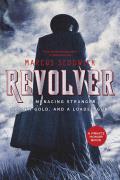
Revolver

by Marcus Sedgwick

Genre: Historical fiction
Age group: 11+

Sig was a normal boy in Alaska... that is, until his father, Einar, drove across the frozen lake outside their house and froze to death. And to make things even more unusual, a man called Wolff came to Sig's house looking for Einar's gold... Einar's gold that Sig knows nothing about. But even though Wolff knows that Sig has no clue where this gold is, he is determined to stay until Sig's stepmother and sister return home from a trip, and maybe even past then. Wolff is dangerous, and there's nothing Sig can do about him. Except... there's a revolver in the pantry. If Sig could get that gun, he could win. He could get rid of Wolff. Can he—or will he—do it? Or will his memories of his dead pacifist mother get the better of him?

This book skipped back and forth between the present (actually the early 1900s in Alaska) and the past (before the early 1900s in Europe). The present is told from Sig's point of view and the past from his father's. Admittedly, getting both of these points of view gives you a lot of information that you otherwise wouldn't get and need to know in order to understand the story. However, it's slightly confusing the way it switches. I was reading and suddenly it switched from present to past. I was really confused and had to go back and start over, using a higher level of concentration than usual. However, I got used to it after maybe 50 pages, and then the story started to get more interesting. It's a little sparse, and Marcus Sedgwick does not waste words on beautiful description, but that works in this case because Alaska is also sparse. Not all stories are cut out for vivid imagery. This is not one of my favorite books and I did not love it, but it wasn't bad. It's an interesting type of mystery/historical fiction that makes you wonder who really is the bad guy.

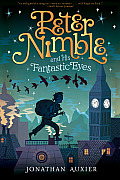
Peter Nimble and His Fantastic Eyes

by Jonathan Auxier

Genre: Fantasy
Age group: 10+

Today, there aren't many blind thieves. But there was a time when there were. Peter Nimble was the best of them all—an orphan, trained to be a thief by his cruel master who forced him to steal jewelry for him, who one day met a haberdasher and stole a box from him. He, naturally, opens the box, and finds inside three pairs of eggs that when cracked reveal—three pairs of eyes. But they aren't normal eyes. There is a pair of gold, a pair of onyx, and a pair of emerald. When he tries the gold pair, he is suddenly transported to another place in another time and finds himself floating in the ocean, next to a ship. He is lifted aboard, and meets Sir Tode, a knight who has been turned into an unfortunate mix between cat and horse. He also meets the haberdasher, who explains to him the eyes and tells him their purpose: to help Peter as he embarks on a trip to discover his one and only destiny.
This book was pretty good. The writing sounds oldish—no, that's a bad way to put it. It sounds not modern, it sounds like it was written by, for example, Merlin. YES, that's what it is. It sounds like it was written by Merlin or some other famous wizard from way-back-when. That's not a bad thing. It's the right style of writing for this book; I think any other way would ruin certain parts of it. It makes the book more whimsical. I also liked how there are so many new obstacles popping up all the time—it adds a lot of excitement. Unfortunately, the fact that so many obstacles are popping up all the time can be a bit overwhelming and feels almost naive, and at times I felt as if this book was written by my 5th grader friend. However, it's a really interesting story, and is carried off pretty well. Maybe it's not as well-written as some of the other books of this genre, but it's certainly a great and entertaining read.

Monday, March 17, 2014

Doll Bones

by Holly Black
NEWBERY HONOR WINNER!!!

Genre: Fiction. Possibly realistic fiction. Sort of horror, I guess... Maybe thriller. Perhaps even fantasy.
Age group: 11+

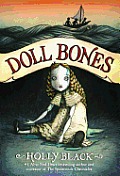
Poppy, Alice, and Zach have been playing their game for years. In this game, they play different characters (who are actually figurines) who go on quests for the Queen, the old china doll who sits in Poppy's closet. The characters have lives, and it feels real to Poppy, Alice and Zach. But now they're getting older, and it's getting harder to play. Alice's overprotective grandmother freaks out and grounds her at the smallest things, and Zach's dad thinks he shouldn't be playing with dolls—he should be tough. When his dad throws away all of his figurines, Zach is forced to lie about why he's quitting the game. His friends, especially Poppy, are bewildered and hurt, and Zach feels upset too. For a little while, it looks like the game is over.
But then Poppy starts getting dreams—dreams about a girl whose bones were turned into the bone china in the Queen, a girl who wants to be buried in her grave. Zach and Alice aren't sure if Poppy's telling the truth or not—after all, their group just broke up, and she might just want attention. But the dream came with a threat, and it's not as if anyone wants to take a risk that could end badly. They set out on a final quest to return the Queen to her rightful burying place, but nobody knows how well this one will end.

This book was excellent because of two main reasons. 1) The suspense. Holly Black knows how to write chillingly. She throws in red herrings and creepy comments about certain events, which make you suspect one thing, but you never really know for sure what's going on. It's GREAT! 2) The fact that you never really know for sure what's going on! The book is totally unpredictable that way. While I was reading, I was constantly re-evaluating what I thought was happening. One minute it was: Poppy's lying. The next: Poppy's telling the truth. The next: Poppy's being influenced. The next: What the heck is going on here?!?!?! There is one flaw that kind of relates to this: You never actually find out exactly what was happening. You suspect, but you never know for sure. Because of this, the end can be considered annoying, but it's also hopeful and exciting as well. It leaves lots of ways for the story-beyond-the-book to continue, and signals more excitement and suspense to come (though not necessarily in another book).

Sunday, February 23, 2014

The Short Seller

by Elissa Brent Weissman

Genre: Realistic fiction
Age group: 10+

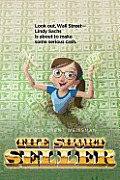
It all started when Lindy Sachs got sick with mononucleosis and had to stay in bed for weeks. She couldn't ice skate, couldn't go to school, couldn't hang out with friends... so her dad introduced her to the stock market. Soon Lindy was hooked. School math made no sense to her, but this actually did. She understood how stocks rose and fell, and how you could sell them to make more money. To keep her busy, her dad gave her $100 to spend on whatever stocks she'd like, and soon Lindy's money is growing and growing. She's actually doing pretty well, and getting into the swing of things, when she clicks back to her parents' account page on the stocks website and sees how much capital (money in the account but not currently being invested) they have. And then Lindy starts to get greedy. Surely it will be okay if she borrows just a little of that money... after all, her parents have so much of it. But then the stocks began to fall drastically. In just one day, Lindy has lost a ton of money, and she needs to find a way to pay it back. Fast.

This book made me really, really interested in the stock market, because it brought all of that big information down to a simpler level and made it easy for younger people to understand it. It showed how stocks and bonds are not necessarily only for adults or economists. In addition to the main storyline of Lindy getting in financial trouble, there's also a smaller subplot about her relationship with her friends Steph, Howe, and a girl who isn't exactly a friend, Cassie. These parts of the story make it more relatable, and make it more appealing overall. It would be much less believable if the friendship subplot were taken out. The writing is also very good at adding suspense as the problems pile up and up and up. I think The Short Seller is really well-crafted, and is not only a good introduction to economics, it is an engaging and interesting novel about a new topic.

Thursday, February 20, 2014

Austenland

by Shannon Hale

Genre: Realistic fiction
Age group: Maybe 13+? It didn't seem remarkably inappropriate but you need to be above a certain age to understand some of the things. I'd say you should be 13+ to truly understand everything, but really this book is geared towards adults.

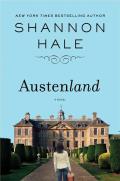
Ever since she watched the BBC TV version of Pride and Prejudice, Jane Hayes' obsession with Colin Firth playing Mr. Darcy is legendary. She is kind of embarrassed by it, but in her eyes, no other man could ever compare to Colin. Then, her great-aunt passes away, and leaves Jane a vacation in her will. But it's not an ordinary vacation to the Bahamas—Jane is going to Pembrook Park, where the time is not the twenty-first century, but 1816, and Jane Hayes can be transported to the time of Jane Austen. Jane decides to give it a go, and soon she is surrounded by handsome gentlemen, cute gardeners, and fine ladies. At first Jane knows it's only a game, and none of it is actually real. The people starting to pay attention to the other visitors are just paid actors. But as Jane gets more and more involved in Pembrook Park and its inhabitants, the line between reality and pretense get blurred, and she isn't really sure of things anymore.

I just read Pride and Prejudice, and I think that reading that helped a lot with understanding this, though having not read any other Jane Austen, you could probably be okay if you haven't read any Jane Austen at all.
This book was funny. This book was unpredictable. This book was quite intriguing. It's kind of hard for me to explain why I liked it... The protagonist, Jane, was very likable. She is relatable and the way she handles the situations she is put into is very interesting because it's not always what others might do, especially others in this book. Also, there were plenty of plot twists or things that happen that add to the interest/suspense level of the book. The characters become believable as you get to know them, and you feel Jane's confusion when she is trying to discern the actors from the characters they are playing. Not everyone is exactly what you think they are. A great follow-up to any Austen novel.

Monday, February 17, 2014

Smile

by Raina Telgemeier

Genre: Memoir/Graphic novel
Age group: 10+

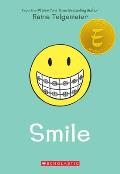
Raina is a normal girl... But one day, on her way home from Girl Scouts, she trips, falls, and knocks out her two front teeth. She's quickly taken to the dentist, and is treated immediately, but the result is less than perfect. So Raina embarks on a journey of dental visits, mouth pain, and sets upon sets of braces. It's not fun, and her friends aren't exactly supportive. As she grapples with crushes, friendship troubles, and oral surgery, Raina is also searching for her place, where she can fit in and finally smile.

I TOTALLY LOVED THIS BOOK!!!! I think it was just really perfect, and having it as a graphic novel added so much more interest. Without the pictures... this book would just fall apart. There's so much shown in the pictures that if they weren't there not only would Smile be so much more confusing, it would lose about three-quarters of its charm and excitement and interest. Also, because there are so many kids today who have braces, this book is great and fits this time period really well. Kids can relate to Raina's experiences, and might even feel better about their own because Raina goes through so much that is so common nowadays. Besides the dental part, Smile also addresses tons of other issues that may come up in schools, such as bullying and crushes. So kids can relate to those as well. This book makes so much sense for this day and age. It is real, and the author obviously remembers a lot about her experiences in middle school because those experiences are so true to life. AND it's funny. There are serious parts, but also humorous parts. I think this book should be required reading for at least all kids with braces.

Sunday, February 9, 2014

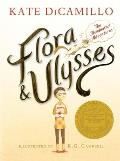
Flora and Ulysses

2014 NEWBERY AWARD WINNER!!!
by Kate DiCamillo

Genre: Fantasy, I guess... It feels less like fantasy and more like just fiction, but it really is more fantastical.

It all started with a vacuum cleaner. When Tootie Tickham received an all-terrain one for her birthday and tried it outside (yes, it works on grass too), she accidentally sucked up a... squirrel?
Yes, a squirrel, and Flora, a natural-born cynic who loves reading comics, saved it from certain death. At first it just appears to be a regular, everyday squirrel who has just been sucked up into an all-terrain vacuum cleaner... But then it lifts up the vacuum cleaner. With one paw. The truth finally dawns on Flora: This squirrel is a superhero!
Flora names the squirrel Ulysses, and they become excellent friends. Ulysses, Flora soon finds out, can fly, write poetry, and of course, lift vacuum cleaners. But every superhero comes with an archvillain. And sure enough, Flora's cheesy-romance-novel-writing mother (who, by the way, cares more about a little shepherdess lamp than about Flora) hates Ulysses as soon as she sees him. She's convinced he's diseased, and is eager to get him out of the way and dead. Can Flora save Ulysses? Can Ulysses save himself? Can either of them save the world? Maybe they can't do it alone, but they can definitely do it together.

This book had a theme of friendship and love all the way through it. And, wonderfully, it was not between a boy and a girl or even human and human—it was between a girl and a squirrel. It's such a different idea... And Kate DiCamillo wrote the idea awesomely. She has dropped a lot of interesting characters into Flora and Ulysses. Another thing I like about this book is that there are some pictures. Sometimes there will be a comic strip illustrating part of the story. Sometimes there are full-page pictures to go along with the words. Sometimes there are small pictures next the words that show one thing they are talking about. Anyways, the pictures help the story a lot, especially the comic strips, because Flora likes comics a lot. Oh, and another good thing is because sometimes Kate DiCamillo writes in a somewhat roundabout, whimsical way, like she is writing for younger audiences, which isn't bad but sometimes it can be a little bit distracting, and in this book she writes in a more straightforward and clear manner. However, I stand firm in my belief that the best aspect in this book was the friendship and love theme. It was just carried off so beautifully!