Tuesday, July 14, 2015

Prudence

by Gail Carriger


Genre: I think this is steampunk.
Age group: Mature 13/14+

Lady Prudence Alessandra Maccon Akeldama, also known as Rue, is a metanatural who can steal the supernatural powers of anybody she touches. She is also the receiver of a spectacular dirigible from her adopted father, the vampire Dama. She promptly names the marvelous acquisition The Spotted Custard, paints it to resemble a ladybug, and sets off to India on a mission for Dama to find the plants for a remarkable new variety of tea he has recently discovered. Along with her quirky crew, including her best friend, The Honourable Primrose Tunstell, Primrose's book-obsessed, professor-ish brother, Percy, and the dashing, rakish Quesnel, Rue sets off on a long, hijinks-filled adventure, stumbling across mysterious plots and characters along the way.

One of my favorite parts of this book is the Victorian-esque language, which is really fun to read and helps set the scene for the story, which takes place in a Victorian-esque era, only one with numerous supernatural creatures. Another of the book's great qualities is the eccentric-ness of everything in it. The characters are funny, quirky, interesting, unusual, and aren't really aware of this. The situations they find themselves in can be quite odd, adding to the overall out-of-the-ordinary-ness of the book. I will admit that at the end, I found that the book got a little political, which I didn't enjoy as much. I wasn't really reading it for politics. However, the end and the surprise(s) that come near the conclusion really are very interesting and unexpected. After reading this, I think I will dive into some of Gail Carriger's other novels and series.

Sunday, April 26, 2015

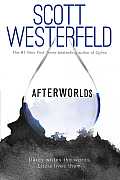
Afterworlds

by Scott Westerfeld

Genre: Realistic fiction/Fantasy
Age group: Mature 12/Mature 13/14+

Darcy should be heading to college, but she just got a two-book contract with a big-name publishing company. They want to publish her book Afterworlds, so instead of going to Oberlin, like she and her parents had planned, she's taking a year off to go to New York and write.
New York is noodle-filled and exciting—when Darcy arrives, she's immediately surrounded by a new crowd of friends: authors, whether they're famous or obscure, published or still waiting. She's particularly close to Imogen, another writer who's getting published soon. There's still a lot about Imogen Darcy doesn't know, but she might just be falling for her...
At the same time, Darcy's revising Afterworlds, about a girl named Lizzie who was caught in a terrorist attack and wished so hard that she was dead that she went to the Afterworld. Now she's become a psychopomp, and she's gained the power to walk in the Afterworld whenever she needs to—but power comes at a price. Other psychopomps, strange ghosts, and serial killers are the priorities in her mind—after Yama, that is, another psychopomp that she just might be in love with.

A very well-written book. I sat down with it intending to read for just a little while, and I ended up reading half the book before I got up and realized I had been there for far longer than expected. It might sound strange, but there are actually two stories intertwined in this book: Darcy's story and Lizzie's story. The chapters alternate. It's a little hard to get used to at first, but it's actually very well done and becomes easier to follow. Honestly, Lizzie's story feels a little more cliched, but it's still quite well-written and does have those small differences in tone and plot that make it truly interesting. I personally liked Darcy's story more; I've never read a teen book before about publishing a book. (There is the younger-age-range book The School Story by Andrew Clements, but it's very different.) There are tons of great details, and the setting and backstory are unique and interesting. Darcy's life just sounds so exciting. It's fun to read about! Overall, a very good read.
Plus, the cover is great.

The Sixth Extinction

by Elizabeth Kolbert

Genre: Nonfiction
Age group: Technically, this is for adults. However, mature kids can read it too. So... Mature 13/14+

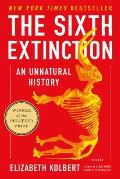
There have been five mass extinctions in the world, and we are currently undergoing the sixth. The ones in the past have been caused by various things: Meteorites, or ice ages, or volcanoes, for example. This one is not caused by those: It is caused by humans. This book looks at the stories of many different animals that have gone extinct or are on the brink of extinction and examines the many, many effects and impacts of this sixth extinction.

I really, really enjoyed this book. I'm not exactly sure how to summarize it, but I gave it my best shot, and I think it's a decent overview. Each chapter talks about a different animal that went extinct or is very close to going extinct and connects that back to how humans are changing the environment and causing new extinctions. The book is mildly scary, but, then again, the things that humans are doing to the world are very scary. It actually really inspired me to try to do something about all of these extinctions. The book is incredibly well-written, and it's very easy to understand the language. It's interesting; not dry at all. It was well-deservingly chosen as one of the New York Times' 10 Best Books of 2014, and I would recommend it for everyone: We all need to know what effects humans are causing on Earth. However, you should DEFINITELY read it if you are the least bit interested in science. An incredible, well-written, fast-moving, eye-opening book.
Also, I just found out, The Sixth Extinction has won the 2015 Pulitzer Prize for Nonfiction! All the more reason why you should read it! Congratulations, The Sixth Extinction and Elizabeth Kolbert!!!!

Thursday, April 16, 2015

Greenglass House

by Kate Milford

Genre: Realistic fiction, with a dash of fantasy mixed in for good measure.
Age group: 10+

Milo's adoptive parents run Greenglass House, an inn for smugglers, and right now it's Milo's winter break. He's looking forward to relaxing and taking it easy for the whole vacation... but then, the doorbell rings. And rings again, and again, and again. Soon the inn is filled with mysterious people, all of whom seem to be hiding things and keeping secrets... secrets that could connect them to Greenglass House. Then Milo meets Meddy, the cook's daughter, and together they decide to piece together the clues and figure out the mysteries their guests have brought to the inn.

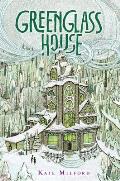
First of all, I'd just like to say: I think this is the most beautiful book cover I've ever seen. That house is just amazing. I would LOVE to live in it and be able to explore it. But back to the actual story: The mystery is really interesting. I love the premise and the plot, and I love how each guest has different backstories connecting to the house and different reasons for coming to stay that ultimately weave together to tell a broader story of Greenglass House. (Isn't that an amazing name, too?!) There are plenty of false leads and red herrings, and there are also subplots that add to the story. For example, Milo is adopted, and a subplot of the book is his struggle with imagining an alternate life with his birth parents while not wanting to appear ungrateful to his adoptive parents. This subplot was really excellently written. In the book, Milo and Meddy don't investigate as themselves—the story doesn't follow the typical average-kids-solve-crazy-mystery-and-impress-grown-ups plotline, necessarily—Meddy introduces Milo to an RPG (role-player game) in which you choose the person you want to pretend to be and play as that person. The inclusion of an RPG adds another level of excitement to the book and also sparks more thought in Milo about whether or not he should be pretending to be someone else or whether dreaming about a different life is okay.
Also, the plot twist is AMAZING. I'm telling you, I NEVER saw it coming. Yet it all makes so much sense!!!!!
This book is really quite complex, but it's very well-written and entertaining. A whimsical yet mysterious read.

Saturday, February 7, 2015

Bringing Down the House

by Ben Mezrich

Genre: Nonfiction, but it's not dry or boring or anything (not that nonfiction books are dry or boring). It feels, at times, like a fiction book, or perhaps a memoir. But it isn't.
Age group: 13+

Kevin was a relatively normal MIT college student—that is, until he got recruited by a secretive, clandestine team of card-counters, run by Micky, a former MIT professor. This group of students has developed a nearly foolproof system for counting blackjack cards and beating the system—and winning millions of dollars. Now they want Kevin to join them, to help them bring down the casino giants of Vegas and show them that the system can be outsmarted. Kevin is introduced to the world of card-counting—it's technically not gambling, and isn't even illegal—and learns to work seamlessly with the other members of the team to create a money-winning powerhouse. But card-counting is risky business. When casinos figure out who's outsmarted the game, they take many precautions to make sure it doesn't happen again, including hiring prestigious private investigators to track down the card-counters and stop them. The MIT team has been doing well so far, but that doesn't mean their good luck can't change.

I originally chose to read this book because I thought it would be interesting to look at the mathematical and scientific parts of blackjack, and how those things can be mathematically and scientifically beaten, but that turned out to be only one of the many great parts of this book. It does take about that stuff, and at the end, it even provides a brief description of the MIT team's card-counting methods, but it's also about the people, and the story. It's technically nonfiction, but it doesn't read like nonfiction. It feels a lot like fiction at times. The story is really cool—a bunch of MIT students take down Vegas with math! Talk about real world application! And the characters, and their interactions with each other, were really interesting to watch. Martinez and Fisher, the two biggest players on the team, are really into blackjack and card-counting, and some of the other members, like Kevin, only want to do it part-time. Viewing this book from a social angle could also be really interesting. Plus, it's gambling. It's addictive. That certainly has an effect on the characters as well.
I would recommend this to people interested in math, interested in card-counting, or just interested in a good story.

Wednesday, January 28, 2015

Prisoners in the Palace

 by Michaela MacColl

Genre: Historical fiction - set in London in 1836
Age group: 12+

Liza Hastings was looking forward to attending balls, meeting charming young men, and being introduced to society—but then her parents died. Now, not only is she alone in the world, with no connections and no work, but she has also been left deeply in debt. She has little choice but to accept the job of a lowly lady's maid at Kensington Palace, serving the Baroness Lehzen and Princess Victoria. It doesn't take long for Liza and Princess Victoria to take a shine to each other, and they soon become friends, even though they are employer and employee. However, Victoria isn't on such good terms with her mother, especially because Victoria is likely to become the Queen when the King dies. Victoria's mother, the Duchess, wants the crown to herself! Liza soon discovers a plot between the Duchess and Sir John Conroy, her "personal secretary and comptroller," to take over the crown and stop Victoria from ever becoming Queen. Can Liza help the true heir become ruler? Or will the Duchess and Sir John succeed in their dastardly plot?

I loved the language used in this book. It feels somewhat old-fashioned, which suits the book perfectly. It's just nice to read the language: It's so much more beautiful and artful than many books I've read. This book also succeeded in getting me interested in Victorian history. There's a reading list included in the back, and the book made this time period seem so interesting that I may actually take a couple of those books out. The plot is great. It takes place in what seems like a domestic place—Kensington Palace—but there's actually quite a lot of intrigue and suspense. Liza makes periodical forays into the more grungy, lowlife parts of London as well, which adds a nice contrast. The characters of this book are interesting, and the plot is exciting, and the book is quite well-written. I definitely recommend it for anyone.

Bitter Melon

by Cara Chow

Genre: Realistic/historical fiction, but it does take place in the 1980s. It could potentially still happen today, though, I suppose. Or maybe not.

Age group: 12/13+

Frances' mother has her whole life planned out for her: She's going to ace school, go to a prestigious university, and become a successful doctor. Then Frances will be able to support her mother, and her mother's work will finally have paid off. But then Frances is accidentally registered in Speech class instead of Calculus, which is a non-negotiable class in her mother's eyes. Frances knows her mother will be upset if she doesn't switch out of Speech, but the thing is, she's actually enjoying it. She's good at speech.
Frances decides to stay in Speech class, secretly defying her mother's strict regime, and this is only the first step towards becoming her own person and doing the things that she wants to do: not the things that her mother convinced her she wanted to do.

I read this book as part of a book group. We all vote on what book we're going to read next, and we came dangerously close to not reading this book. I'm really, really glad that we did.
This book is one of the saddest ones I've ever read. I know, I'm probably being melodramatic, but it just felt so real: I could relate to Frances, even though I've never been in her situation. The characters really came alive for me, so I couldn't just think of them as little paper people in the book. They had feelings too. This thought was very present in my mind whenever anyone made a decision that affected other people in the book.
The choice Frances had to eventually make... It's not sad, exactly, but I was thinking about what I might do if I were in her shoes, and no matter which way I decided to go, I still felt really bad, either for Frances or for her mother. At the end, I felt especially bad for Frances' mother. She did some very bad things, and she should be punished, but her punishment was harsh. She's still a human being, and I think she still needs to be shown at least a little compassion.
I really, really enjoyed reading this book. It made me think a lot about issues that I don't always think about.

Some questions from the book group about this book:
1) What would you have done in Frances' situation: Done your own thing or try to please your mother?
2) Do you agree with Frances' mother about how eating lots of bitter melon will make you like, or at least tolerate, it? Do you agree that the strong endure suffering and eat the bitterness? Why/why not?
3) Do you think Frances' mom was really a bad person? Why/why not?
4) Was Derek a good thing for Frances or a bad thing?
5) Do you think that because of this bitterness, Frances will be a stronger person later on? Why/why not?
6) Do you think it was right of Frances to do everything behind her mom's back? Do you think things would have turned out differently if she had told?

Wednesday, August 13, 2014

Sophie's World

by Jostein Gaarder

Genre: Science fiction? Realistic fiction? Nonfiction? It's hard to classify. Let's just say it's nonfiction and fantasy combined.
Age group: 12+ (but older is fine too. If you read it at 12 you might want to read it again at, say, 22 and see if you notice anything new.)

One day, a perfectly normal 14-year-old girl called Sophie gets a letter in the mail. The letter has no return address—it's just a simple white envelope, and inside it contains a piece of paper with two questions on it: Who are you? and Where did the world come from? Sophie, who has never thought about these things before, suddenly finds herself asking these questions too. And soon another envelope arrives, with the start of a philosophy course inside.
But as Sophie is learning philosophy from the strange professor Alberto, she's also finding mysterious letters with cryptic messages addressed to a girl named Hilde, c/o Sophie. Who is Hilde, and why are these letters turning up? This is only one the questions Sophie must ask as she journeys into the world of philosophy.

My dad strongly recommended I read this book, but I put it off for a while. When I finally did start reading, I actually found it very interesting. Be warned; there's a lot of philosophy and talking about philosophy inside. It can seem daunting. But Jostein Gaarder does a really good job of making philosophy accessible for young people. He uses comparisons and allegories and metaphors and similes and whatnot to make concepts easier to understand. He often has Alberto say something and then demonstrate it, or have Sophie restate it in simpler terms. Sometimes certain sections require re-reading, but I learned a lot and enjoyed the story too.
The sub-plot with Hilde is AWESOME. At first it can be really confusing, and for a while I had no idea what Hilde had to do with anything. But in the middle of the book everything changes and everything falls into place and you understand! It is just remarkable. This book was very different from any of the other books I have ever read, fiction and nonfiction alike. It is very aware that it is a book. I think that is probably the aspect of it that I most enjoyed.

Tuesday, August 12, 2014

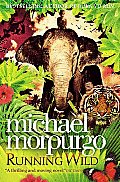
Running Wild

by Michael Morpurgo

Genre: Realistic fiction
Age group: 10-11+

Will's dad died in the army, and it's been haunting his family ever since. Now it's just his mom and himself, and they're living with Will's grandparents in the shadow of his dad's death. But one day, his grandparents suggest that maybe Will and his mom should take a vacation, and relax a little bit. So they travel to the tropics.
But while Will is on the beach taking an elephant ride, the elephant suddenly runs away, into the jungle. Will soon finds out why: A huge tsunami is coming, and it almost certainly will kill everyone still on the beach.
Now Will is in the jungle, with only an elephant and the other animals to keep him company. He bonds particularly with the orangutans he meets—the babies and the mother, and the large male he calls Other One. But with the peace of the jungle comes conflict and chaos from the poachers who want to kill the animals—and the orangutans—and sell them.

In general Michael Morpurgo's style of writing is (in my opinion) really, really good. He writes clearly and simply and also incredibly descriptively—he doesn't overstate things or go into too much depth, but has just the right amount of detail. He shows that in reality, writing is an art. It's actually quite beautiful. I like how the story starts in one place, but by the end, you've been taken to places you never knew would ever end up in. It's not the most predictable of books. I also like how Morpurgo is not afraid to face the hard truth. People do die; the world is not always a wonderful place, and he is very realistic in his stories in that sense. He has written a lot of other good books, including War Horse and Private Peaceful, and many others besides. If you've read Morpurgo's other books and enjoyed them, I encourage you to try this book, and similarly, if you read this and enjoy it, I encourage you to try his other books.

Saturday, July 19, 2014

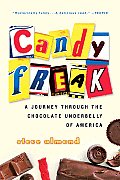
Candyfreak

by Steve Almond

Genre: Memoir
Age group: 11+ (But it's really versatile. An adult could read this and not get bored. A 10 year old could probably handle the language as well. (I don't mean bad language! He uses a lot of obscure words))

Throughout his whole life, starting at a very young age, Steve Almond has loved candy. He's kind of relied upon candy to help him through hard times. He eats at least one piece EVERY DAY without fail. But not all candy is available anymore. For example, one of his absolute favorite chocolate bars, the Caravelle, was discontinued. Why do smaller candy businesses close down? How are candies and chocolate bars like the Caravelle even made? These are just some of the questions he's trying to answer as he journeys through "the chocolate underbelly of America" to find out the sweet, sticky truth.

The topic of this book is just amazing. I mean, a whole book about candy, where you actually get to see what goes on inside real live candy factories and read about the marvelous tastes and fillings and chocolate enrobers and nut applicators involved with the making and consuming of these candies? It was awesome! Steve Almond uses many big and/or obscure words that younger readers may have to look up the meanings for, but other than that, the language is pretty easy to understand. The memoir aspect of this book was made clear in the beginning, a little in the middle parts, and again reinforced at the end, but sometimes the "So What" was a little unclear or hard to make out. However, you, the reader, still get that candy has been his crutch in hard times and that it is very important to him. This book was filled with awesome descriptions and inspired me to eat more candy, especially the ones described in great detail in this book. Before Candyfreak, I never realized how much I was missing out on.

Moment of Silence

There is no author, because this is not a book.
Recently Malaysian Airlines Flight MH17 was shot down over the border of Ukraine and Russia. Nobody has yet been pinpointed as the perpetrator, the person who actually did the missile shooting. It might not even have been intentional. Maybe it was a case of misidentification, and they thought the plane was something else. But all 298 people on board that plane were killed. I would like to observe a moment of silence for those people right now.


Thank you.

Saturday, May 10, 2014

The School for Good and Evil

by Soman Chainani


Genre: Fantasy
Age group: 11/12+

In Sophie and Agatha's town, every year, two children are kidnapped. Well, not so much kidnapped as just taken—for they are not taken to be ransomed, but taken to be trained at the School for Good and the School for Evil. And after every year, new fairy tales show up with those two children as the hero and the villain. This year, it's Sophie and Agatha's turn. Sophie loves pink and spends hours each day on beauty treatments and makeup. She's sure she's going to the School for Good, to be turned into a perfect princess. Agatha dresses in black, misshapen dresses, and lives in a graveyard with her cat, Reaper. It's likely that she's heading for the School for Evil, where students learn Uglification and Special (Evil) Talents. But when the day actually comes, and Sophie and Agatha are finally taken, Sophie's dropped in the School of Evil and Agatha at the School of Good... Surely there's been some mistake! ...But the School Master doesn't make mistakes. If they really are in the wrong schools, is there some way to put things right? Or could Sophie and Agatha actually be in the places they're meant for?

Though this book might have some cliches and whatnot, it's so excellent that stuff doesn't really matter. I started it one morning, and I literally could not think about anything else for the whole day. I found myself picking this book up and reading another chapter—or two, or three, or the whole rest of the book—whenever I had the chance. It was that good. I liked how the characters interacted with each other: It was so real! Soman Chainani really understands how people work, and he uses many of these types of relationships between two people in this book. I also really enjoyed seeing how the characters changed over the course of the book. This is a kind of story where the characters' changes are a huge part of the plot. I can't say too much about the changes, for fear of spoiling the book, though. However, I will say that Sophie and Agatha's friendship is a very important part of the book, and that changes a LOT. I loved this book a lot, and I highly recommend it to everyone. Not everything is what it seems in this book—in fact, many of the characters are clueless to or are hiding things from themselves—and all of this secrecy wrapped in a magnificent display of storytelling makes for an extremely exciting read.

Saturday, April 26, 2014

The Wig in the Window

by Kristen Kittscher

Genre: Realistic fiction/mystery
Age group:10/11+

Sophie Young and Grace Yang are—almost—spies. Well, they're trying to be. They're erring on the old-fashioned side, and use walkie-talkies rather than smartphones, and they like to sneak out in the middle of the night to spy on any of their neighbors who might still have their lights on—you never know who in your neighborhood might be a serial killer. But they're not really serious about it. It never escalates to anything more than a fun game... until they peek inside the window of Charlotte Agford, the middle school guidance counselor.
Sophie and Grace always knew there was something up about Agford. What's with the weird wig, and her posse of students who are always ready to do her bidding, S.M.I.L.E.? When they see an unsettlingly red liquid spattered all over her kitchen counter, and overhear a suspicious phone call, they know something's up. The police dismiss it after they find evidence to show that it was just beet juice, Sophie and Grace think there's more to it, especially when a mysterious blue car and a strange man with a unibrow show up. There's more to Agford than meets the eye... And it's up to Young & Yang to figure out what's going on.

This was a really great read. It was entertaining, and kept me completely on my toes (not literally). I think it's an excellent mystery book. Usually when I read mystery books, every time I get a new clue I guess who the criminal really is, and then at the end I see if any of my guesses were right. This book has so many red herrings that partway through the book I just gave up trying to figure out who was the bad guy. It's not confusing, though. It's just really, really hard to point fingers because there are multiple situations which would work. Besides the main plot, where Sophie & Grace are trying to solve the mystery of Charlotte Agford, there are also some friendship problems which makes it more relatable (and slightly more believable) for middle-grade readers. This book is intense, exciting, and sometimes even scary, and the story is not only a great idea, it's written really well. My only problem is the cover: it doesn't really fit the characters the way they're described in the book. But that's just a cover.

Tuesday, April 8, 2014

Ender's Game

by Orson Scott Card

Genre: Science fiction
Age group: 11-12+

It's hundreds of years into the future, and aliens, buggers, have attacked Earth multiple times... Earth's resources are running out and her army commanders are running out of options. The buggers are strong, and seem to share one mind—they communicate almost instantaneously. It will be hard for the humans to beat them. They've taken to breeding military geniuses to defeat the aliens, and are waiting for the one who will end the buggers once and for all...
And they want Ender Wiggin, a boy of only six. They want him to skip ahead to battle school and become the one they want. He's stronger than his compassionate sister Valentine and more composed than his psychopath brother Peter—the government believes he is the one. And Ender is going to try to be that.
Battle school isn't easy for Ender, but he excels in everything he does. Colonel Graff, the principal of battle school, has taken a shine to Ender, and he gets promoted and promoted. But when he faces the Simulation, a series of games to help him train and get better at fighting, he is sometimes forced to do things he doesn't want to do. As Ender is pushed further and further into this new world of competition, danger and desperation, he tries to hold the pressure... But little does he know, the worst is yet to come.

As I usually do, I really liked this book. Firstly, the end is so surprising. I was totally not expecting what happened to happen. It works so much better than if the end part was just cut off and everything was happy ever after. The end goes deeper than that. Some people might say this book is a giant cliche, what with the aliens attacking and all that. IT ISN'T. Ender's Game still focuses on saving the world, but it's also about human nature. Through the action and fight scenes, we get to see inside Ender's head and watch as he's handling the pressure in the only way he knows how. Sure, this book may not be as action-packed as other books, but that doesn't make it boring. It just means that it goes deeper than the superficial violence and romance. (There isn't really much romantic stuff in Ender's Game, though.) This could be considered a book about aliens and exploding starships—or it could be considered a book about ethics and human nature. It's really up to you.

Monday, April 7, 2014

Revolver

by Marcus Sedgwick

Genre: Historical fiction
Age group: 11+

Sig was a normal boy in Alaska... that is, until his father, Einar, drove across the frozen lake outside their house and froze to death. And to make things even more unusual, a man called Wolff came to Sig's house looking for Einar's gold... Einar's gold that Sig knows nothing about. But even though Wolff knows that Sig has no clue where this gold is, he is determined to stay until Sig's stepmother and sister return home from a trip, and maybe even past then. Wolff is dangerous, and there's nothing Sig can do about him. Except... there's a revolver in the pantry. If Sig could get that gun, he could win. He could get rid of Wolff. Can he—or will he—do it? Or will his memories of his dead pacifist mother get the better of him?

This book skipped back and forth between the present (actually the early 1900s in Alaska) and the past (before the early 1900s in Europe). The present is told from Sig's point of view and the past from his father's. Admittedly, getting both of these points of view gives you a lot of information that you otherwise wouldn't get and need to know in order to understand the story. However, it's slightly confusing the way it switches. I was reading and suddenly it switched from present to past. I was really confused and had to go back and start over, using a higher level of concentration than usual. However, I got used to it after maybe 50 pages, and then the story started to get more interesting. It's a little sparse, and Marcus Sedgwick does not waste words on beautiful description, but that works in this case because Alaska is also sparse. Not all stories are cut out for vivid imagery. This is not one of my favorite books and I did not love it, but it wasn't bad. It's an interesting type of mystery/historical fiction that makes you wonder who really is the bad guy.

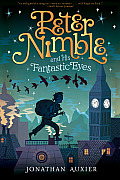
Peter Nimble and His Fantastic Eyes

by Jonathan Auxier

Genre: Fantasy
Age group: 10+

Today, there aren't many blind thieves. But there was a time when there were. Peter Nimble was the best of them all—an orphan, trained to be a thief by his cruel master who forced him to steal jewelry for him, who one day met a haberdasher and stole a box from him. He, naturally, opens the box, and finds inside three pairs of eggs that when cracked reveal—three pairs of eyes. But they aren't normal eyes. There is a pair of gold, a pair of onyx, and a pair of emerald. When he tries the gold pair, he is suddenly transported to another place in another time and finds himself floating in the ocean, next to a ship. He is lifted aboard, and meets Sir Tode, a knight who has been turned into an unfortunate mix between cat and horse. He also meets the haberdasher, who explains to him the eyes and tells him their purpose: to help Peter as he embarks on a trip to discover his one and only destiny.
This book was pretty good. The writing sounds oldish—no, that's a bad way to put it. It sounds not modern, it sounds like it was written by, for example, Merlin. YES, that's what it is. It sounds like it was written by Merlin or some other famous wizard from way-back-when. That's not a bad thing. It's the right style of writing for this book; I think any other way would ruin certain parts of it. It makes the book more whimsical. I also liked how there are so many new obstacles popping up all the time—it adds a lot of excitement. Unfortunately, the fact that so many obstacles are popping up all the time can be a bit overwhelming and feels almost naive, and at times I felt as if this book was written by my 5th grader friend. However, it's a really interesting story, and is carried off pretty well. Maybe it's not as well-written as some of the other books of this genre, but it's certainly a great and entertaining read.

Monday, March 17, 2014

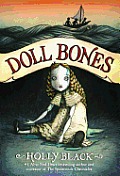
Doll Bones

by Holly Black
NEWBERY HONOR WINNER!!!

Genre: Fiction. Possibly realistic fiction. Sort of horror, I guess... Maybe thriller. Perhaps even fantasy.
Age group: 11+

Poppy, Alice, and Zach have been playing their game for years. In this game, they play different characters (who are actually figurines) who go on quests for the Queen, the old china doll who sits in Poppy's closet. The characters have lives, and it feels real to Poppy, Alice and Zach. But now they're getting older, and it's getting harder to play. Alice's overprotective grandmother freaks out and grounds her at the smallest things, and Zach's dad thinks he shouldn't be playing with dolls—he should be tough. When his dad throws away all of his figurines, Zach is forced to lie about why he's quitting the game. His friends, especially Poppy, are bewildered and hurt, and Zach feels upset too. For a little while, it looks like the game is over.
But then Poppy starts getting dreams—dreams about a girl whose bones were turned into the bone china in the Queen, a girl who wants to be buried in her grave. Zach and Alice aren't sure if Poppy's telling the truth or not—after all, their group just broke up, and she might just want attention. But the dream came with a threat, and it's not as if anyone wants to take a risk that could end badly. They set out on a final quest to return the Queen to her rightful burying place, but nobody knows how well this one will end.

This book was excellent because of two main reasons. 1) The suspense. Holly Black knows how to write chillingly. She throws in red herrings and creepy comments about certain events, which make you suspect one thing, but you never really know for sure what's going on. It's GREAT! 2) The fact that you never really know for sure what's going on! The book is totally unpredictable that way. While I was reading, I was constantly re-evaluating what I thought was happening. One minute it was: Poppy's lying. The next: Poppy's telling the truth. The next: Poppy's being influenced. The next: What the heck is going on here?!?!?! There is one flaw that kind of relates to this: You never actually find out exactly what was happening. You suspect, but you never know for sure. Because of this, the end can be considered annoying, but it's also hopeful and exciting as well. It leaves lots of ways for the story-beyond-the-book to continue, and signals more excitement and suspense to come (though not necessarily in another book).

Sunday, February 23, 2014

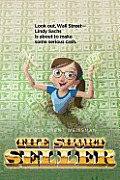
The Short Seller

by Elissa Brent Weissman

Genre: Realistic fiction
Age group: 10+

It all started when Lindy Sachs got sick with mononucleosis and had to stay in bed for weeks. She couldn't ice skate, couldn't go to school, couldn't hang out with friends... so her dad introduced her to the stock market. Soon Lindy was hooked. School math made no sense to her, but this actually did. She understood how stocks rose and fell, and how you could sell them to make more money. To keep her busy, her dad gave her $100 to spend on whatever stocks she'd like, and soon Lindy's money is growing and growing. She's actually doing pretty well, and getting into the swing of things, when she clicks back to her parents' account page on the stocks website and sees how much capital (money in the account but not currently being invested) they have. And then Lindy starts to get greedy. Surely it will be okay if she borrows just a little of that money... after all, her parents have so much of it. But then the stocks began to fall drastically. In just one day, Lindy has lost a ton of money, and she needs to find a way to pay it back. Fast.

This book made me really, really interested in the stock market, because it brought all of that big information down to a simpler level and made it easy for younger people to understand it. It showed how stocks and bonds are not necessarily only for adults or economists. In addition to the main storyline of Lindy getting in financial trouble, there's also a smaller subplot about her relationship with her friends Steph, Howe, and a girl who isn't exactly a friend, Cassie. These parts of the story make it more relatable, and make it more appealing overall. It would be much less believable if the friendship subplot were taken out. The writing is also very good at adding suspense as the problems pile up and up and up. I think The Short Seller is really well-crafted, and is not only a good introduction to economics, it is an engaging and interesting novel about a new topic.

Thursday, February 20, 2014

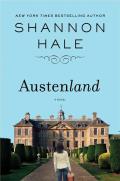
Austenland

by Shannon Hale

Genre: Realistic fiction
Age group: Maybe 13+? It didn't seem remarkably inappropriate but you need to be above a certain age to understand some of the things. I'd say you should be 13+ to truly understand everything, but really this book is geared towards adults.

Ever since she watched the BBC TV version of Pride and Prejudice, Jane Hayes' obsession with Colin Firth playing Mr. Darcy is legendary. She is kind of embarrassed by it, but in her eyes, no other man could ever compare to Colin. Then, her great-aunt passes away, and leaves Jane a vacation in her will. But it's not an ordinary vacation to the Bahamas—Jane is going to Pembrook Park, where the time is not the twenty-first century, but 1816, and Jane Hayes can be transported to the time of Jane Austen. Jane decides to give it a go, and soon she is surrounded by handsome gentlemen, cute gardeners, and fine ladies. At first Jane knows it's only a game, and none of it is actually real. The people starting to pay attention to the other visitors are just paid actors. But as Jane gets more and more involved in Pembrook Park and its inhabitants, the line between reality and pretense get blurred, and she isn't really sure of things anymore.

I just read Pride and Prejudice, and I think that reading that helped a lot with understanding this, though having not read any other Jane Austen, you could probably be okay if you haven't read any Jane Austen at all.
This book was funny. This book was unpredictable. This book was quite intriguing. It's kind of hard for me to explain why I liked it... The protagonist, Jane, was very likable. She is relatable and the way she handles the situations she is put into is very interesting because it's not always what others might do, especially others in this book. Also, there were plenty of plot twists or things that happen that add to the interest/suspense level of the book. The characters become believable as you get to know them, and you feel Jane's confusion when she is trying to discern the actors from the characters they are playing. Not everyone is exactly what you think they are. A great follow-up to any Austen novel.

Monday, February 17, 2014

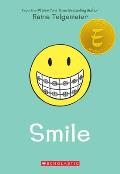
Smile

by Raina Telgemeier

Genre: Memoir/Graphic novel
Age group: 10+

Raina is a normal girl... But one day, on her way home from Girl Scouts, she trips, falls, and knocks out her two front teeth. She's quickly taken to the dentist, and is treated immediately, but the result is less than perfect. So Raina embarks on a journey of dental visits, mouth pain, and sets upon sets of braces. It's not fun, and her friends aren't exactly supportive. As she grapples with crushes, friendship troubles, and oral surgery, Raina is also searching for her place, where she can fit in and finally smile.

I TOTALLY LOVED THIS BOOK!!!! I think it was just really perfect, and having it as a graphic novel added so much more interest. Without the pictures... this book would just fall apart. There's so much shown in the pictures that if they weren't there not only would Smile be so much more confusing, it would lose about three-quarters of its charm and excitement and interest. Also, because there are so many kids today who have braces, this book is great and fits this time period really well. Kids can relate to Raina's experiences, and might even feel better about their own because Raina goes through so much that is so common nowadays. Besides the dental part, Smile also addresses tons of other issues that may come up in schools, such as bullying and crushes. So kids can relate to those as well. This book makes so much sense for this day and age. It is real, and the author obviously remembers a lot about her experiences in middle school because those experiences are so true to life. AND it's funny. There are serious parts, but also humorous parts. I think this book should be required reading for at least all kids with braces.